
The Cost of Skipping These Meetings: What Creatives Don't Realize
Our latest podcast episode dives into the creative journey, offering insights for every creative professional looking to build an online business. We discuss effective business strategy and the power of collaboration within the industry. It's all about navigating the path to becoming a successful entrepreneur.
🕒 Episode Chapters:
0:00 – Team sync for social media
5:50 – Establishing rhythm & planning
6:46 – Efficient one‑hour meeting plan
11:57 – Self‑audit for continuous improvement
13:30 – Efficient meetings for progress
16:40 – Collaborative spaces & meeting tracking
19:20 – Improving communication through meetings
22:53 – Quarterly meeting overview
27:57 – Monthly meeting feedback process
29:31 – Building an enjoyable work culture
34:58 – Creative CEO Challenge insights
36:17 – Creator to CEO Challenge
39:01 – Thank you & your voice
🔑 Key Points
• Why meeting rhythms matter: A well‑designed cadence sets a predictable rhythm, improving accountability and reducing miscommunication. It’s a drumbeat that keeps your team synchronized.
• The Four P’s of meetings: Define Purpose, invite only the right People, follow a clear Process (agenda) and focus on the Product/Payoff. This structure turns meetings into decision‑making sessions, not time drains.
• Daily, weekly, monthly & quarterly cadences: Daily huddles align teams and identify blockers; weekly meetings dive deeper; monthly and quarterly meetings review KPIs, budgets and strategy. Adjust frequency to match workload and avoid meeting fatigue.
• Create culture & accountability: Consistent cadence fosters open communication, collaboration and a sense of responsibility.
• Optimize meetings: Consolidate ad‑hoc chats into fewer, longer sessions, standardize agendas and start small if your team resists structure. Use meeting analytics to track effectiveness and adjust over time.
🔗 Links & Resources:
• Creative to CEO Challenge: https://creativetoceochallenge.com/ – gain clarity, confidence & strategy to turn your creative gifts into consistent income.
• Business Funding: https://creditsavant.io/ – secure funding for your creative business.
• Creativepreneur Gear: https://whatstheirony.com/ – apparel for the creative entrepreneur.
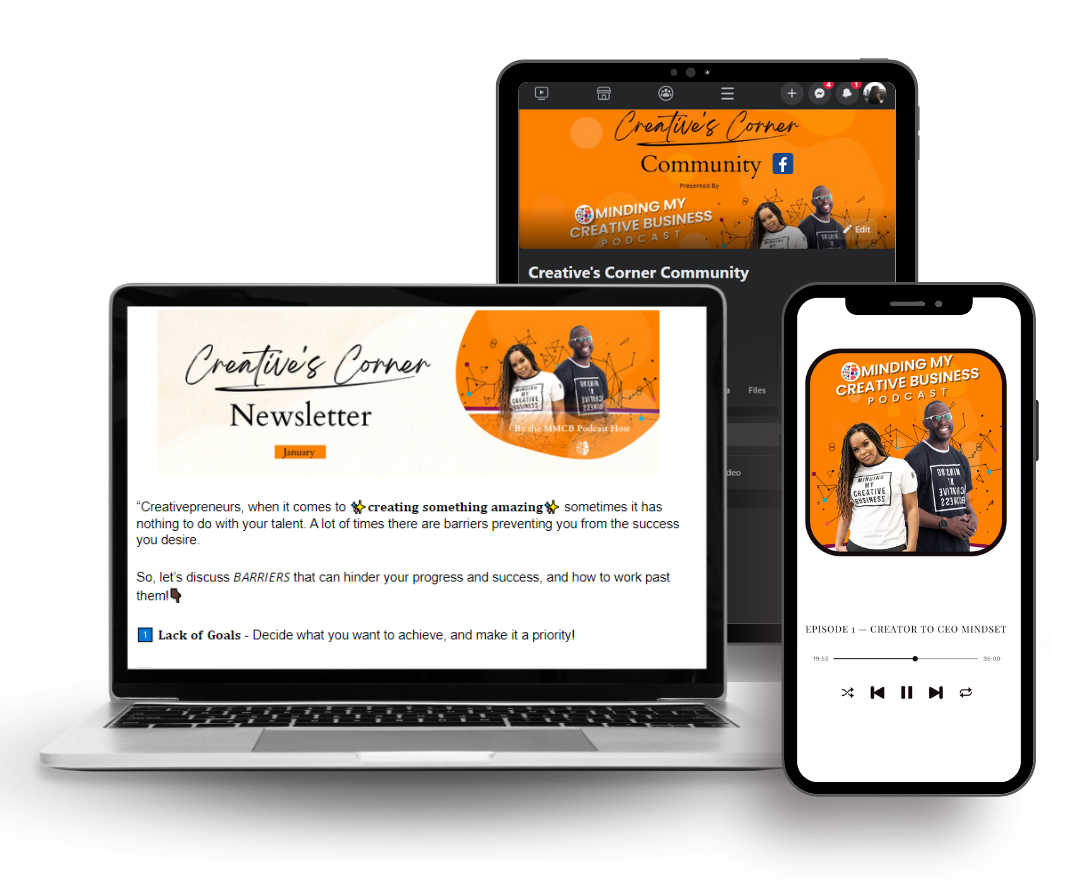
• Creative’s Corner Newsletter: Sign up at https://mmcbpodcast.com/ for monthly tips & mindset shifts in under 5 minutes.
👍 Join Our Community:
• Listen to the show: https://feeds.captivate.fm/mmcbpodcast/
• Website & inquiries: https://mmcbpodcast.com | email: hello@mmcbpodcast.com
Follow us:
• Facebook: @mindingmycreativebusiness
• Instagram: @mindingmycreativebusiness
• TikTok: @mindingmycreativebusiness
We’re Ron & ShySpeaks, music industry creators turned entrepreneurs. Each week we share insights, mistakes and strategies to help creative professionals build small businesses and scale like CEOs. Comment with your biggest takeaway, like if you found value and subscribe for more creative entrepreneur tips!
Transcript
CEO's are not just randomly taking phone calls at random times. They're already thinking about meeting with stakeholders. They're thinking about meeting with the board. They're thinking about.
And they put that stuff on the calendar. Well, in their van. 37% of meetings don't even have an agenda.
Ron "iRonic" Lee Jr.:We're not talking about those meetings because we understand. But you do have to meet. You cannot create something of the magnitude that you're trying to create without meeting about it.
ShySpeaks:If you're a creative entrepreneur and you're trying to figure out how to take your things to the next level, and you're trying to figure out how to create culture, then get in the habit of creating meetings that energize people.
Ron "iRonic" Lee Jr.:Yeah, you don't prepare when you're there, and you prepare prior to you getting there.
Based on you listening to this podcast, you're probably a creative entrepreneur who's ready to stop hustling for clients and start building a business that runs on purpose. Profit and peace.
ShySpeaks:If that's you, we want to invite you to join the Creative to CEO challenge. A five day live coaching experience designed to help you shift your mindset and develop the habits to turn your creativity into consistent cash flow.
Ron "iRonic" Lee Jr.:And it's all happening live on Zoom inside a private community of ambitious creative entrepreneurs just like you. People who are done guessing, done grinding, and ready to build with clarity and confidence.
ShySpeaks:By the end of the challenge, you will have a crystal clear direction on your next 90 days. A profit plan that fits your lifestyle and the framework to start earning 10k plus months doing what you love without burning out or selling out.
Ron "iRonic" Lee Jr.:So if that sounds like what you need, then tap the link in the description or scan a QR code if you're watching this on screen. And do not forget to upgrade to VIP for bonus coaching and behind the scenes Q and A.
And every day of the challenge with me and Shy, we can't wait to.
ShySpeaks:Help you unlock CEO mode and the freedom you've been working for. Now let's get back to that episode.
Ron "iRonic" Lee Jr.:Welcome, welcome, welcome to the mind of my creative business podcast. The number one podcast for creative entrepreneurs to learn strategy, structure and self development. I'm your co host, Ron of Ronnie.
ShySpeaks:Place Jr. And I am your co host, Shy Speaks. And this is going to be another fire episode. Why? Because we're moving into something that I think is very important for the creative CEO.
We're talking about meeting rhythms, right? Meeting rhythms are important for sustainability. Now I just threw out a big vocabulary word and some people got stuck at Meeting, right?
Meeting like, ah, these meetings make me yawn. No, we're talking about the meetings that drive decisions. Right.
If you want to start a business, you can launch it all you want, but you want to be able to sustain it. You're going to have to have be in the.
You have to be like the, the habit of regularly reviewing what's going on in the company and that requires meetings. So we're going to help you out with it.
Ron "iRonic" Lee Jr.:Yeah, no, definitely. And we get it.
We've come from environments to where we are part of meetings and we're like, dawg, this has been an email, so we not talking about those meetings because we understand. But you do have to meet. You cannot create something of the magnitude that you're trying to create without meeting about it.
ShySpeaks:Right. The reason why is because a business has decisions that have to happen and the decisions have to happen based on you actually reviewing KPIs. Right.
What we call key performance indicators. How is your business performing? If I look at this, this lets me know.
So I'm looking at the spreadsheet, I'm looking at the inventory, I'm looking at customer satisfaction, I'm reviewing the surveys that we ask for at the end of each. Whatever I'm at what our reviews are. So, like, I have to sit down and look at these things because these things drive decisions.
These are KPI, you know what I mean? And I can never. You could just do it on your own, but then you have to sit down and meet about it with the team so that you all are all on sync.
And this is going to drive how we're going to do things for maybe even social media that if that makes you feel comfortable. I'm looking at my social media metrics and I'm like, okay, this is what's going on.
And now based on what's happening in social media, the team and I are talking that, hey, we found these, we're performing. So what we're going to do in our next upcoming content shoot, we're gonna shoot a few more of these and a little less of these.
That decision was made because we had time to review it and we did it in the meeting. And it can't just be all random times of the night. Oh, it's nine o'. Clock. He's just calling. Let's meet right now.
No, we need to have some set stuff in motion. We need to have a rhythm to them.
Ron "iRonic" Lee Jr.:No.
And that's like you said, it's like a lot of times we're just having discussions but like you said, those discussions should lead to decisions, not just blanketed discussions where it's like, what was, hey, we could have, you know, so, so.
ShySpeaks:Yeah, no, that's why we're not talking about unproductive meetings. So let's, let's go ahead and clear the air on how we make a meeting productive. We're not going to sit here and talk about, oh, we can click off.
Because they're going to talk about what makes an effective meeting. I know that. No, we're going to talk about meeting rhythms and what you should install in your business so that you're thinking like a CEO, right?
CEOs are not just randomly taking phone calls at random time. You think the CEO of like Coca Cola, something like, hey, I got this idea. Hey, what's such and such. They need to know they have a meeting rhythm.
We'll get into that. But like, I'm telling you, like, I was thinking about this, like, they're, they're already thinking about meeting with stakeholders.
They're thinking about meeting with the board. They're thinking about. And they put that stuff on the calendar well in advance, right?
And that's what we want you to start doing, is thinking about what needs to be discussed and putting it in advance. And we'll tell you how to do so. But we need to get past what is an unproductive meeting.
So let's talk about what is an effective meeting, what should be there.
Ron "iRonic" Lee Jr.:So, you know, we talk about the four P's, right? So there's four P's, you know. You know, I love alliteration, right? Where there's the purpose, like, why are we meeting? What is the meeting about?
The people who needs to be involved in this meeting, right? Because a lot of times people to be in those meetings that don't gotta be there, right?
And then you don't want to have too many, you know, chefs in the kitchen cooking, right?
And so depending on, depending on, once again, what the purpose of that meeting is, in some cases, you might want to brainstorm and ideate and have other people in there. But in a lot of cases, that's not the case. But then we want to talk about your process.
Like, are we discussing processes or the process of the meeting? And then the product, like, as a result of this meeting, this is what we're walking away with, right?
Or we may be discussing a product, but either way, those are the things. Purpose, people, process, product.
ShySpeaks:As I listen to you say that, purpose, people, what was it? Purpose, people, process. And then you said product or we can even use the word payoff. Like what is the payoff from this meeting?
Or like you said, what is the end result? This needs to be leading somewhere. But ultimately, what that makes me think of is that an agenda, every meeting needs an agenda.
You guys are just hopping on calls, right? Are we creative? We going off the vibe? We just hopping on calls. We just don't kind of just chop it up and just see where it lead.
No, we need to have an agenda. 37% of meetings don't even have an agenda. And that's like, really? Let's just call that 40%, you know, so we just.
40% of the time, we just on here what, just shoot. Shooting in the dark.
Ron "iRonic" Lee Jr.:Right, right. So 37% don't have an agenda. And then 67% of C suite executives that, that, that are in these meetings, they saying that the agenda is important.
Right? So it's like you got 40% when you ain't got a meeting. And then the other 6% are saying, but we need one. So they see the importance of it.
So why we ain't got no agenda?
ShySpeaks:Why we don't. Why, why don't we have an agenda? You know why we don't have an agenda? It's because we haven't done what we're talking about.
We have not installed the rhythm. And when I install the rhythm, I think about who we need to meet with, what we need to discuss. So let's go back to that example I just gave.
If I'm a corporate of a Fortune 500, and that's what some of you guys say, oh, I'm a billionaire, I'm a multimillionaire. Well, guess what? If you're like that, and I was given an example of the corporate.
Some of those Fortune 500 companies who've gone public, they're meeting with a stakeholder, the annual or biannual stakeholders meeting, and all the shareholders or whomever, Right? So when we meet with them, we're not going to just go off the vibe.
When we get in there, since we've already planned that meeting next year, we're going to meet with them. Here it is. We're in. We're in September. We already know we're going to meet with our next shareholder is going to be September 15th.
Just go ahead and put that on the calendar. And what are we going to be talking to them about? That's the first thing we're going to ask ourselves.
We're not going to just be, how long is this meeting going to be? Right. We're going to. We're going to.
Actually, we'll keep it an hour because we're just going to give them everything they need to know within an hour. And so how are we going to make sure we give it to them within an hour? Right.
Because now we're going to come up with the process about how we're going to effectively communicate in an hour and leave room for them to have questions or Q and A, things like that. What's going to be the product. They're going to walk away knowing where the earnings are, where the, what the dividends are going to pay out for the.
What's the new structure, who's the ipo?
If there's a new CEO, there's a new leadership, they're going to walk away with all the information and they're going to walk away with knowing where we are in trajectory and how we can expect to see the numbers turn over time.
Ron "iRonic" Lee Jr.:Why?
ShySpeaks:Because we don't want them to pull their money out. See, this is real CEO talk. When I say we don't want them to put their money out, we're talking about the shareholders, stakeholders.
We don't want them to pull out their funds because we need, you know, we've gone public. Right. So that's an important meeting. I'm just giving you the example of why.
So we're not even having that kind of meeting without an agenda because that's an important meeting half the time. The reason why we don't have an agenda is because it's not even an important meeting.
Ron "iRonic" Lee Jr.:Right, right.
ShySpeaks:It's not an important meeting.
Ron "iRonic" Lee Jr.:And listen, I know y' all like, well, you talking about stakeholders and we not there yet. Listen, but that's the thing. You're not there yet, but the goal is for you to get there. Right?
And even if you're not there yet, you want to get into practice, right? AI was like, practice. We talking about practice. Like, no, you have to practice it and develop the rhythm.
So when you get there, it's not new to you, it's not foreign to you. You know what I'm saying? So don't, don't brush past this conversation because you're not there yet.
You don't prepare when you're there, you prepare prior to you getting there. So I just wanted to kind of put that out there because they like stakeholders. We ain't got no stakeholders, you know what I'm saying?
But you may be the stakeholder, or, you know what I'm saying?
ShySpeaks:You are a stakeholder. You're currently the 100% stakeholder. But some of you all are saying, well, I need invest.
Okay, so if you had investors, you'd have to have start having an investor meeting. So if you already know you're preparing to have an investor or two, you know, like, let me go ahead and put an investors meeting on my calendar.
See, this is what we talking about. We're talking about installing meeting rhythms even though you don't even have the investor yet.
Because if I had the investors, what would I be talking to them about? This is what we see. See, this is what.
Ron "iRonic" Lee Jr.:Hold on. Don't, don't, don't brush over that. If I had an investor, what would I be talking to them about?
So that's going to take you some soul searching to see, what should I be talking about? Because like you said, there may be some needs.
We had a conversation with somebody the other day and we asked them, what do you need to take this to the next level? And that's something that they had not thought about.
ShySpeaks:Right.
Ron "iRonic" Lee Jr.:If somebody came to you and was like, what do you need? They wouldn't be able to answer that question. And you never want to be in that position.
ShySpeaks:Right?
Ron "iRonic" Lee Jr.:Exactly. So that's why you start preparing for these things now before you get in that seat so that you can have the answers for them. So.
ShySpeaks:Right. So, so now we have, on my calendar next year, I have two meetings where I meet with my investors.
I just put them on the calendar and when I'm meeting with them, I'm going to be talking about. These are things that's going to be in the agenda, right. So they can be effective. We can have a payoff, a product.
They're going to walk away knowing where the company stands. I'll walk away knowing where my, where our financials are, because they're going to infuse a little bit more cash into the business.
And so we'll know where we're going. Right. This is just an example. Or if you already have an. You already have investors, like, dang. They feel like they don't know what's going on.
And a lot of times people get into issues. I've talked to a lot of creative entrepreneurs and they're like, well, I had investors and it just didn't work out.
Were they informed that they know what was going on? Did they feel left out of the situation not knowing where their money is at? I've heard, haven't you?
Ron "iRonic" Lee Jr.:No, I definitely heard and I've, I've had conversations with people like you said, because it's like they, they felt some kind of way because the investor felt some kind of way. But it's like there was no communication, right? There was. They weren't clear on what to expect from you.
You weren't clear on what to expect from them because there was no meeting. It was just kind of like, okay, we're giving you this money, do what you do. And that was it.
ShySpeaks:Right, Right. And then you go, just touch back in. When. Whenever the vibe kicks in. No, whenever I feel it. Like whenever. No, let's set it on the calendar.
So these are stakeholders, then we move beyond that.
And if you're a non profit or something like that, you have a board of directors or even if you're a for profit business and you have a board of advisors, people that advise you, let's go ahead and put them on the calendar in advance. Right. So I'm going high level view and we'll drill down eventually to get to the point where the more frequent meetings.
But at least we're touching bases with people who have a vested interest or in this particular company, in this creative based business. This is how CEOs think.
Ron "iRonic" Lee Jr.:And even in doing so, those meetings, it helps you to review what you currently have. A lot of times we get so caught up in the weeds of things that we just don't stop and pause and review. We don't audit. Right.
Auditing what you're doing is not a negative thing. When you hear audit, a lot of people, they fear that they run from that. It's like, no, you have to audit.
You have to be honest with yourself of where you are because you're trying to get somewhere. Right? So having these meeting rhythms in these times, whether it's monthly, quarterly, whatever the case may be, it forces you to stop.
It forces you to look and inspect and see what am I doing well, what can I improve in? What needs to be tweaked and adjusted so then I can go ahead and do that.
And hopefully you're getting to the goals and objectives that you're setting out to accomplish with this phenomenal creative business that you have.
ShySpeaks:Exactly. A lot of creative entrepreneurs now are like, man, and I'm giving kudos.
Like, man, I got this business coach, you know, I got Ron, you know, he my creative business coach and he's setting, he's helping me set my goals and he's helping me do this. And we're. But at some point we're gonna. While you with a coach, you're probably reviewing it, but when you're no longer with A coach.
Do you have meeting rhythms set up with your. To review these things? Like, and sometimes there's nobody gonna be involved and nobody else gonna be in the meeting but you. Right.
It's just a time that you set aside on your calendar to review something.
But that goes back to what you were talking about earlier when you said it was too many cooks in the creative kitchen because you can have too many people in the meeting. But what about, like, I think we need to talk about who needs to be in the meeting a little bit.
Because when we talk about creative based business, let's, let's drill in a little bit when it comes to that. Let's say you have the design. Who all needs to be involved in design or the creation process?
Ron "iRonic" Lee Jr.:Yeah, I mean, anybody that's gonna help move it forward and help get you to that goal and objective. So I've been in meetings to where I'm one of the people where it's like a needs to know basis, right?
So it's like, if I don't need to know this information, I don't need to be in this meeting, right? Cause what does it do? But now I know some people think, well, I just want to know and for what, right?
It's like, I'm so busy, I have a lot on my plate to where it's like I limit the amount of information that I, that I enter you, right? So for me, it's not important. Even though I can be a great asset, I don't need to be in all these meetings, right?
So you gotta identify, okay, based off of where we're trying to go, right? Based off of, you know, what needs to happen for this to get us there, who needs to be there. So you may have.
Listen, sometimes it may just be one or two people that's in that meeting. Sometimes it may be five or six. But you gotta see who is gonna move this forward because that's what.
Once again, we're having discussions for decision making to move us forward and propel us. So if this person's not gonna be there or this person's not gonna help us to propel and move it forward, they don't gotta be in the meeting.
ShySpeaks:Right?
And also I will say the importance of meeting rhythms is, you know, like, we talk about reviewing what's going on, you know, being able to have that forecast and that decision making.
But I'd also say on the back of what we're talking about with who needs to be in a meeting, the other important aspects of meeting rhythms is that we would have. It affects your culture. Right. Because you have ineffective meetings, it's going to bleed into the culture of the company. Right.
So what you talk about is I could be there, maybe I'm good at ideation, but that's really not in my wheelhouse. It's not in my purview of my task, it's not my role. I don't need to be there. But what happens is you have people, too many cooks in the kitchen now.
It's creating like this. Yeah. You know what I'm trying to say? It can mess with the culture.
Ron "iRonic" Lee Jr.:Yeah. And it affects the culture because what happens is it can convolute it.
And anytime there's convolution, anytime there's cloudiness and fogginess, that affects morale. And then you got people coming in hard like, oh, we got to go on a meeting. And then that just that that affects creativity.
I mean, that's not productivity. And one thing as well was like you got every time that you call a meeting, you're stopping productivity in some other area. Right?
Now, don't get me wrong, it can affect the overall productivity in a good way. But if they're meaningless and if you got the wrong people there, then you're pulling them from one task.
That's why I tell people, it's like, listen, make sure that this is important for me to be there because I'm having to stop to do something else. And you don't understand that now I gotta go and start to do it again. That take work?
ShySpeaks:Yeah.
Ron "iRonic" Lee Jr.:That takes like a car, you know what I'm saying?
ShySpeaks:Right. And that's what I was about to say. Well, just a minute ago when I was saying like, it's like it's going to bleed into the culture.
Because now I know more than I need to know and it's kind of affecting my work because I'm thinking, well, what about this? Or now because I was in that meeting, I walked away thinking that was going to be some of my task.
When it's really this person's task, you know what I'm saying? But I thought, well, hey, where did the ball get dropped? Well, I was in a meeting and you said, no, I thought you was going to do that.
They shouldn't even have been.
Ron "iRonic" Lee Jr.:They said they at the table.
ShySpeaks:In fact, there's like Ikea, I believe this is something I read about ikea. And like they make sure they had like all these certain collaboration rooms. Right.
Not necessarily for the people that have real like full on meetings in there, but sometimes everything I need to be like a. A meeting. Maybe you and this person do need to collaborate and let's chit chat. But y' all can do that off in, like a more.
You know what I'm trying to say, in a different space, you know, in a creative space, y' all can have a quick chat. This is not to be in here lounging all along with the whiteboard, with the conference room thing. You know, this is not like that.
So there's that, and then there are other companies who make it to where when it comes to meeting, you actually have to log your meeting into a data tool, like a meeting data tool, so that we could track how long this meeting was, who was involved in this meeting, and what was the outcome of this meeting.
And if they see a person within the meeting and they weren't really contributing anything or didn't really seem like they walked away with any tasks, the data that this data software will be like, why was this person even in here? You know, so that was kind of ineffective for them.
And so they don't have to go and bow for themselves, like, saying, hey, can I please get out this meeting? Like, it will tell them, like, this person that need to be there now, that's just like, at a very high level.
But this is stuff that you need to be doing. We don't need a software necessarily to do that, especially if you have a smaller. A smaller business. So I just wanted to put up those two things.
And when I say culture and meetings matter, because some companies have made it so much, meetings are so important that they created additional spaces, this little lounge hangout, areas for people to collaborate. So collaboration is important. We're not talking about, let's. Let's avoid collaboration. That's not what we're saying.
And so you can meet in those ways over there. So we want to make it comfortable, but also we want to track the importance and the effectiveness of the meeting. You know what I'm trying to say?
That's it. And so, yeah, that's definitely because it's.
Ron "iRonic" Lee Jr.:Important I say that. You know me, I'm a leaning on that clarity piece. You want to be clear, the clearer you are, it just. It helps everybody move forward.
So once again, going back to the purpose of the meeting and all those things, it's like, does this have a purpose? Is this person a part of the purpose? If this person is not a part of that purpose, they don't need to be there.
I want to know the one thing that's holding most creative entrepreneurs back. It's not the talent, it's not even the vision. It's the lack of capital.
Every day I watch brilliant creatives miss life changing opportunities simply because they can't access business funding funding traditional banks, they really don't understand creative business like that. And most lenders, well they don't care. But guess what? That ends today with the minding my creative business partnership with Credit Savant.
You can Access up to $150,000 in business credit. You heard correct. Up to $150,000 in business Credit. They have 0% interest options with 30 plus funding programs designed for creatives just like you.
So what I need you to do is visit credit savant IO now tell them MCB sent you.
ShySpeaks:So, so I talked to you earlier about I was going to install. We want to help you install some productive meeting rhythms. Would you. We wanted you to understand the why before we did that. Okay.
So on that note of like the four P's and what makes it effective and realizing how it affects culture because it can create bleed into people's roles and all of that kind of stuff or it actually makes it feel like I'm left out of the information that I need to have you say I don't need to know this. There are some people like I didn't get the information that I needed. So we understand how that can create a company that lacks communications.
They just don't communicate well. And that can be your culture, but we don't want that to be your culture. So we have to install the proper meetings.
And so far we've only installed one meeting and that was your high level level stakeholder meeting. Which are, which are stakeholders?
Most creative entrepreneurs that we are talking to who are either just like emerging or who've been established for a while but just trying to go to that next level as a CEO. They probably haven't gone public yet. But that doesn't mean you don't have investors.
And so that's that annual or biannual meeting that you're doing with those investors. So that's a high level. You have to meet with them very frequently, but they are informed. Move to the next meeting level.
Now we have a quarterly meeting, right? With the quarterly meeting. We want you to go ahead and install it on your calendar. When are my quarterly meetings going to happen?
I know this kind of sounds crazy, but it's what happens. It's the rhythm. It's. This is how we're going to meet about these things. You got to have something.
Ron "iRonic" Lee Jr.:No, that's all I'm Saying every three months, every three months you need to be having that quarterly meeting because you're planning out the quarter. Like, okay, what are we focusing on? This quarter and things like that. So yeah, like you said, just put it on your calendar.
That's four times out of the year.
ShySpeaks:That's it.
Ron "iRonic" Lee Jr.:That's four meetings.
ShySpeaks:That's four meetings. That'S it. I need you to put four meetings on your calendar. You're going to pick a day of the week that these particular meetings happen.
These meetings happen on the third Wednesday or they always happen on the fourth Thursday of the month. Just go ahead, circle that, that time out, put it on the fourth meeting, go into the calendar. Does this meeting repeat? Yes, it does repeat.
What time does repeat and for how long? Right?
Ron "iRonic" Lee Jr.:Yeah, every 20 repeats every three months. Right. That's a simple. Like if you got Google or any of the calendar software should be able to do that.
ShySpeaks:Right?
Ron "iRonic" Lee Jr.:And it's there and you forget, I mean, not forget about it, but you put it there, it's there.
ShySpeaks:Right. And we know what we have. So, okay, I have four meetings on my calendar. What we're doing, like you just said, it's the 90 day sprint.
Oftentimes when you're working with these coaches, especially the creative business coaches, when you're working with anybody that is maybe a chief operation officer, you're working with a operations contractor. If you're working even with a social media team, they're going to say, we'll work with you for the next 90 days. 90 days. 90 days.
So this is why we're saying put this quarterly calendar on there. So anybody you've been working with in 90 day sprints, you're going to be reviewing what happened in those 90 days, right?
Social media company, I brought them in for 90 days. Let's see how it went. Hey, so it's like, man, well, when are we going to meet to talk about what happened?
Because we want to see if you want to renew this contract. You already have a calendar on your, you already have a, an appointment on your calendar for that upcoming quarterly meeting.
So I'm on the call with my contractor, who's my social media person. We did a 90 day situation and when can we review that?
I'm not trying to find some random meeting put on, hey, okay, my next quarterly meeting is coming up on this day. I'm going to go ahead and add you, invite you to that meeting. Does that work for you? We're not putting a new meeting on the calendar.
This is the same meeting we were Already going to have. Now we just have to work them into the agenda because we know we're going to be reviewing social metrics on that particular call.
If I had like a particular designer or somebody that I collaborated with, we did a lunch together, a maybe I make, maybe I make some kind of food and, or maybe I make some type of clothing and I collaborate with somebody and we want that we launched it, we want to see how it happens in 90 days. When are we going to meet about it? You don't have to put a new meeting on your calendar.
You can add them to the already existing upcoming 90 day calendar if you want to do it that way.
These are people who you work with, you know, you're going to be working with regularly or even if not, you're just like, this is just a good place here.
So we know on this particular meeting, this quarterly meeting is probably not going to be an hour, maybe a little bit longer because we're going to go over the internal company numbers of what we're going over, like what are all our key performance indicators. We're going to go over our financials and then of course, at the end of the last 30 minutes, we're going to let them hop on the call. Right.
So that these other outside parties are hopping in.
So we had the internal meeting for about an hour and then that last 30 minutes, hey, you know, I'm going to have them come in, they're going to talk about whatever it is that they were talking about and we're going to go through it like that. What do you think about what I'm saying?
Ron "iRonic" Lee Jr.:No, I mean, it's cool. I love the fact that.
And once again, so you have this quarterly meeting that's, you know, expansive, but then the different elements that you need to discuss, you have them there. So, and this isn't. Everybody ain't got to be there for the whole time.
So it's like if you got your social media person, they come in, they say they spill and they can bounce. They don't need to stay there for. You may meet with your CPA as well. Right. Or who's doing your financials. Right. So it's.
No, I love that idea with just having it just one and just putting everybody into that one. So then you don't have to have multiple. That's what happens when you start having multiple, then that's when you start to get that in that rut.
Right, right. That's when you start to get that burnout and you start to feel some kind of way about it. But it's like, no, let's just do this.
We meet with, put everybody there. That's our, Our quarterly. Yeah, our quarterly.
ShySpeaks:Me. Right.
Ron "iRonic" Lee Jr.:I love it.
ShySpeaks:So, so you can, and I talked about it the other way. I say you can have the team meeting for an hour and then everybody else for the remainder. Or you can do it the opposite way. Right.
So that quarterly meeting is there. It's already a two hour meeting or a 90 meeting. A 90 minute meeting or a two hour meeting on your calendar.
You already know that I've invited it, this person, this person and this person to review what we've done in 90.
Now when I say this person, this person, these are all key people who have done something in your creative based business we need to review their 90 day work with and are we going to renew or how we're going to shift or we're going to go over their metrics. So you're going to say, hey, we already have this on the third Thursday of the month. It's actually upcoming. I'm going to invite you.
You'll see that the, on the calendar it says two hours. You don't have to be there the whole time. We're just going to have you come in at the top of the call. You're going to say everything you need to say.
You're going to. We're going to talk about it. The rest of the team will be on. They're on there the whole time. The actual internal full team is on there.
We're gonna have somebody you're gonna drop off. Okay, cool, cool. Thank you so much. And the next 30 minutes in, I have this, another person coming on. We're gonna talk for about 30 minutes.
We're gonna drop off the call. This whole time that core team is on there now that those two people have dropped off the call. All right, cool. Now it's just us.
What y' all think about those two meetings? Cool, cool, cool. We got the information from that that's gonna inform what we're gonna do now.
We're going to meet about what we need to meet about and then boom, we're off the call. So it's a little bit of a lengthier quarterly meeting, but you can now add people to this quarterly meeting instead of a whole new day.
All I do is meet. Well, if you just add them to the quarterly meeting.
Ron "iRonic" Lee Jr.:Yeah, yeah, like I said, I rather right have a lengthier meeting than have all these small meetings throughout because once again, that's draining. But if I'm setting Aside a day. And I know we got got two hours or whatever. Yeah. To me that, to me that, to me it seems more effective.
I mean, I know to you as well, but I'm just saying.
ShySpeaks:And, and, and that's another thing that happens when it comes to meeting rhythms. We talk about having meeting rhythms because it is going to help us review what we need to review.
The meeting rhythm is going to set culture in our company, but more importantly, it's going to help sustain energy. We're not wasting energy. And that is about sustainability. You know what I mean? So this is why we talk about those things and we're gonna move on.
We're gonna inst. A monthly meeting. I'll let. Ron, I'm sure you've probably been in a plethora of monthly meetings in your life. Right.
But if you just had a very effective quarterly meeting, you have all the information you need to move forward. We can take this into the monthly meeting.
Ron "iRonic" Lee Jr.:Right, right. And I said it's a similar concept, but once again, it's not going to be as robust as your quarterly. Right.
Because now you're breaking your quarterly down to monthly goals and tasks. Right. So you want to review and see. Okay, cool. For us to be on track for this 90 day sprint. Right. What needs to happen in this month? Right.
So we're going to put those tasks and tactics in place for that month. So who needs to be a part of that meeting? Because they're helping you to fulfill that. And then you're going to meet and see. Okay, cool.
Did we do everything that we were supposed to do by the end of this month so that going into the next month we can focus on the next month's task or are there things that we have to carry over in order for us to get to once again that 90 day. So it all feeds to one another. So going back, even taking a step back further.
So your annual feeds, your quarterly then your quarterly feeds the monthly. Right. So that's why those are important to have those monthly. But yeah, it's like we reviewing and seeing. Okay, cool. Did we do everything?
What do we need to do further? And then does it need to roll over? And once again, those are still with. It's not with the key stakeholders. You're not meeting with them that often.
Right. But these are people that are boost to the ground people that are going out and doing the tactics or implementing what it is that your mission is.
ShySpeaks:I even add to that with that meeting rhythm, that's a space for them to bring up certain Things about how they feel, the people who are doing the work, how they feel about certain things. Just kind of getting the internal feedback. Let's just kind of table that for the monthly meeting.
Like, ah, man, I really feel like it'll be cool if we change this or, you know, like we don't need to change that right away.
Like if there's something that needs to be changed, like this is ineffective, then we obviously need to put that in like a, in a weekly joint so we can hear, fix that. But if it's something that, like, it's just something I feel is not pressing, great. You know what, that's a really good.
Let's bring that up on the all teams meeting, that monthly meeting, right? So we have an agenda for that meeting.
We're making sure that we're on track to hit whatever our 90 day goals are, but more so we have an opportunity to feedback and hear from each other. You want to build some rapport in some of these meetings as well because again, culture is there. It's like, dang, they're just slamming through.
It's always them telling me they're driving, driving, driving. And you want to kind of get a little feedback as well, get a little collaboration going on.
Ron "iRonic" Lee Jr.:That's definitely, I mean, listen.
ShySpeaks:You need.
Ron "iRonic" Lee Jr.:Those spaces for that rapport building within these meeting spaces.
Because I mean, at the end of the day, nobody likes meetings now if they're done effectively and done right, people like the results of them, but don't nobody like doing them. So part of that rapport building and things like that helps to make it a little bit more bearable.
ShySpeaks:Right? Or actually it won't even have to be bearable. It'll be like, like, man, these are cool. I feel informed. I feel like I got my, I feel heard.
Ron "iRonic" Lee Jr.:Yeah, yeah, right.
ShySpeaks:People want to feel heard. They don't want to feel talked to. So you, some people may walk away feeling like, all right, this is cool.
Add a little, little, little, little laughter, kind of build a little. So it didn't feel as stiff as everything else. So it could, it could eventually get to the point where, oh man, quarterly meetings. I feel bad.
Cause like, did I hit my numbers? Did I do this? Did I do that? You know, weekly meetings is like, oh, we gotta get this done, get out this.
But the monthly meetings, we gotta to talk, everybody. We get a little collaboration. Like, I enjoy those.
I get to, you know, we get heard, we get out, you know, so you can get to the point, you can create a culture where people enjoy some, some Some aspect of it. And, and if you get to the point where you're like really doing well as a company. This is one of my goals.
We haven't done it yet in our company, but I look like for our annual meeting to like me be able to take the team somewhere, right?
So we're meeting instead of like I live in Dallas, Texas, I like to go to like like maybe somewhere in Florida or something or by the beach and we'd like meet over there, right. And so now, now are they going to be enjoying these meetings? Oh yeah. He's like, you could create meetings and make them enjoyable, right?
So we have our annual meeting.
We go to, we go to this place, I book out, we get a couple rooms and of course you, sometimes when you get a couple rooms they'll let you have the meeting space or the conference room. You can kind of reserve that just kind of pro bono. And so we have our meetings there, we talk and then after that we go hang in the city.
You have your own time to go hang.
We have to do everything together as a team, you know, so there are people who are meeting like that and they enjoy company meetings because it becomes, you know what I'm saying, something effective. So anyway, I just try to say you can create a culture like that. I'm just telling you maybe that's something you can install.
Maybe you already at this point. Well, you know what, that's a good idea. We already have that kind of money in the company.
I could afford to do maybe like couple thousand and cover just this core team to go and they'll enjoy it. But we can really get in there and knock a lot out in the meeting because they're having so much fun. So put that into your meeting rhythms.
The meetings supposed to not just help you review, not just help you make decisions, it's supposed to help you stave off negative energy and refresh positive energy. Right? It should refresh you. You know, I'm not going to get into how to install a weekly meeting. I think you guys know that, right?
I would say when it comes to daily meetings, I think a lot of times people think a daily meeting has to happen every single day. You know what I'm trying to say? But it's like, like cuz technically a daily meeting.
But I think you can have like they're considered daily if they're like on Mondays and Wednesdays because they're not technically like it's not a once a me meeting. Or we meet Monday, Wednesday, Friday, like that's our, you Know what I'm trying to say? So there's. You have room for that.
But I do think that there's only a few people that you may need to be talking to that. Honestly, you may not need to be talking to anybody, really. That may need to be an email. That may need to be a text. That may need to be. Come on.
Cause let's go back to what we talked about from the beginning. We want to have meeting rhythms and not a meeting rut. The kind of make you yawn, the kind of make you like this did not move the needle forward.
That's why you need to have another thing installed. And that is a communication channel. That's an effective channel. So we actually having little small meetings on the chat, right?
So, boom, boom, we talk. What we need to talk. We uploaded it here to the portal. You know, all that type of stuff. You know what I'm saying? Like, we email.
We got a situation situated. We have our project management tool. We were able to talk right there. We didn't necessarily need that.
So if you're having effective monthly meeting, you really shouldn't need all these daily meetings, especially if you have a weekly meeting. I'm not even gonna. We're not even gonna go weekly and daily. I want you to focus on. I got 12 meetings on my calendar monthly.
I have four quarterly, and I have another one that's an annual. So how much? That's 12. 12 plus 4 plus 1. You have 17 meetings in a year out of 365 days. That's not a lot of meetings.
Ron "iRonic" Lee Jr.:Not at all.
ShySpeaks:If you make those effective, you won't be doing all those daily or weekly. But get in the rhythm of that and find ways to make your. Is what I'm gonna say.
If you're a creative entrepreneur and you're trying to figure out how to take your things to the next level, and you're trying to figure out how to create culture, then get in the habit of creating meetings that energize people, it refreshes them. It's a culture of communication and transparency. Yeah, that's what the meetings are. A culture where we make decisions and we move things forward.
We don't stall, and we're not staying. That all comes from there. And it is a. It is a meeting and a culture where we are.
We're reviewing what's going on and letting the data speak to us and not just our feelings.
Ron "iRonic" Lee Jr.:Definitely. Now we. We had an episode. We talked about data, the importance of data, you know, feeding your decisions and. Yeah.
So You, Once you get the data, you definitely want to meet about it and have conversations about it and discuss the data.
ShySpeaks:Data, right.
Ron "iRonic" Lee Jr.:Because it's one thing to have the data. If you do nothing with the data, then that's irrelevant.
ShySpeaks:But that's another topic for another time. So I would say this in. On your. On that note, that what you just said, I would say go check out that episode.
We actually brought in someone who is a AI data engineer, expert type of person. We have a playlist called Resources for Creative Entrepreneurs.
So if you're trying to figure out how to, like, really use data to make it be informative, go check out our Resources for our Creative Entreprene playlist and look for that data episode. One of the things that I didn't mention that you probably. If you. At this point in the.
Of the conversation, we're here at the end, you probably heard it earlier. We made mention of it in the middle of the episode.
But the reason why we're talking about meeting rhythms is because Ron and I, we put together this Creative CEO Challenge, right? And this Creative CEO Challenge. In it, we have sustainability.
And a part of sustainability is you have to have the proper rhythms, the financial rhythms, but they have to be attached to proper meeting rhythms. Right? And so listen, I love the idea that we've come up with to help our audience members with the creative the CEO Challenge.
And so again, you've already heard about it, but I'm gonna tell you about it one more time because we want to invite you to get yourself registered so you can be a part of the next upcoming challenge. And you're gonna go through it with other creative CEOs just like yourself, just for five days.
But it's the most impactful five days because we put a lot into what it would take for you to step into CEO mode.
Ron "iRonic" Lee Jr.:Yeah, no, definitely. We wanna help you to develop the CL that you need and the systems and structure that you need so that you can sustain. So, no, we're excited about it.
And yes, there's going to be a link in the bio or the comments. Wherever you are engaging with this content, there'll be a link for you to click to join the next cohort.
So join that so that you can experience that transformation that you need to get from where you are now to where you're trying to get to within your credibility business.
ShySpeaks:Right. So the cool thing about the Creator to CEO Challenge is not just that it's five days live, cool mentor, live coaching. It's not all of that.
It's not just that, it's just that you walk away with a real like CEO, a creative CEO playbook.
And then also you walk away with a signature offer that's going to help you be able to scale to like those 10k months if you're not there, if you're at 10k, we're going beyond that because we put some stuff in place based on the experience we've had with the people we've worked with, the people we've helped helped in our own experience as creative entrepreneurs and even beyond our experience because that's what we do here on this channel. We interview six, seven, eight figure creative entrepreneurs.
And so we're like think tanking with them and pulling everything that we know into this particular challenge. So do take the challenge again, Creative to CEO challenge. You're invited to be a part of it. It's not just a challenge.
You're going to be, be a part of the community as well. So yeah.
Ron "iRonic" Lee Jr.:All right, so on that note, we want to thank you for watching and listening. We encourage you to comment, share, subscribe.
If you're watching this on YouTube, subscribe, but share with another creative entrepreneur that you know could benefit from this information.
Because once again, our goal is to reach a million creative entrepreneurs to help them transition from where they are to where they're trying to get you within their creative business. So, yeah, share, share.
ShySpeaks:Matter of fact, I want to put a little challenge together right now. Outside of the created the CEO challenge, you want to click the link and join that.
Like when you share, don't just like, just like share to your story. Let me see. If you share it to your story, I may enter you into a chance to win. Maybe, let's see, like about $100. Let's see.
Anybody that's doing that, we got you. If you make sure you tag us now. I shared it. Nobody saw it. Tag us, you know, tag us at MMCB podcast. Right? No, is as I said it. Right. Okay.
And then of course, while we're talking about that, you want to go to mmcbpodcast.com if you also want to join that creative challenge. We want to thank you for in advance for joining because we know it's going to be fire just because you're there.
Thank you so much for tuning in to this particular episode about meeting rhythms. We, we really, really hope that you were able to extract something great out of it. Find you something that lets you review things.
Find you something that helps you make a decision. Find you a meeting rhythm that helps you get energy and and refreshes your energy and staves off negative energy.
So if you put that there, you will have sustainability. And on that note. We done? Yeah.
Ron "iRonic" Lee Jr.:So you gonna. What's the mantra? You gotta. You gotta close out the month.
ShySpeaks:Oh, I thought we was gonna not do the mantra.
Ron "iRonic" Lee Jr.:We do the mantra every time.
ShySpeaks:No, seriously, thank you so much for listening to us talk about these things and installing it. Hopefully you pulled out your calendar and went ahead and put those installations they have on this meeting.
But we don't just want you to listen to us. We want to hear. We want you to hear from you as well. Right. So we want to give you an opportunity to speak over yourself. And we have the MMCB mantra.
And I want you to repeat after me when I say this. Here we go. All it takes. All it takes is intention.
Ron "iRonic" Lee Jr.:Is intention.
ShySpeaks:Consistency. Consistency. And laser focus.
Ron "iRonic" Lee Jr.:And laser focus.
ShySpeaks:To mind my creative deal.
Ron "iRonic" Lee Jr.:To mind my creative business. Peace.